


Curves Line LED Wall Light
Curves Line LED Wall Light
Couldn't load pickup availability
 Quality checked
 Genuine product
 Covered by warranty
Product details
Product details
A single curved bar lit along its inner edge, so the wall behind gains a halo that follows the arc. The light is never pointed into the room, which means the fixture can sit at eye level in a hallway or beside a bed without any glare at all.
Three profiles change the shape of that halo. A, B and C differ in how tightly the arc curves and how it is oriented, which alters the pattern of light on the wall considerably. Worth choosing deliberately rather than at random, since the wall pattern is the whole effect.
Black holds a hard graphic line against pale plaster and is the stronger choice on a feature wall. White is quieter and reads as almost architectural, disappearing when unlit. Warm white suits bedrooms and living rooms; cold white is crisper and better in a modern hallway. Installation should be carried out by a competent person, with the circuit isolated before work begins. Because none of the three profiles projects far from the wall, it suits a narrow hallway where a deeper fitting would catch a passing shoulder. Space two or three along a stairwell at a consistent height so the arcs read as a deliberate sequence rather than isolated points of light.
- Product type: LED wall light
- Profiles available: A, B, C
- Colours available: Black, White
- Light options: Warm white, Cold white
- Effect: Halo of light following the arc
- Use: Bedrooms, hallways, living rooms, feature walls
- Installation: To be fitted by a competent person; isolate the circuit before work
- In the box: 1 x wall light, fixings


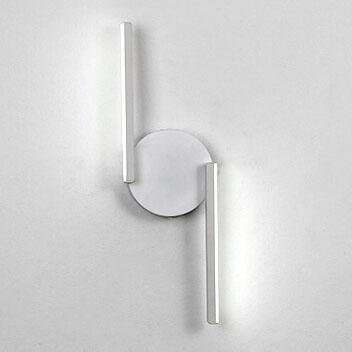

The Wall Is The Lampshade
A single curved bar, lit along its inner edge, throws a halo onto the plaster that follows the arc. The light is never pointed into the room, which is why it can sit at eye level in a hallway or beside a bed with no glare at all.

Choose The Profile On Purpose
A, B and C differ in how tightly the arc curves and how it is oriented, and that changes the pattern on the wall considerably. Since the wall pattern is the entire effect, this is one decision worth making deliberately rather than at random.

Black To Draw, White To Vanish
Black holds a hard graphic line against pale plaster and is the stronger choice on a feature wall. White is quieter and almost architectural, disappearing entirely when unlit. Warm white for bedrooms, cold white for a modern hallway.